The nursery will advance seagrass restoration capability in Tasmania and beyond, including developing techniques for seed collection, storage and propagation.
“We will also be working with our local community on habitat restoration trials in the wild,” Dr Stuart-Smith said.
“Importantly, it will provide the critical infrastructure and expertise, and build the knowledge required for adaptive management of our marine ecosystems under ever-increasing human impacts, contributing to a growing conservation toolkit that underpins scalable, evidence-based marine restoration.”
The investment in this seagrass restoration nursery supports the Australian Government's Threatened Species Action Plan 2022–2032, helping safeguard species at greatest risk of extinction.
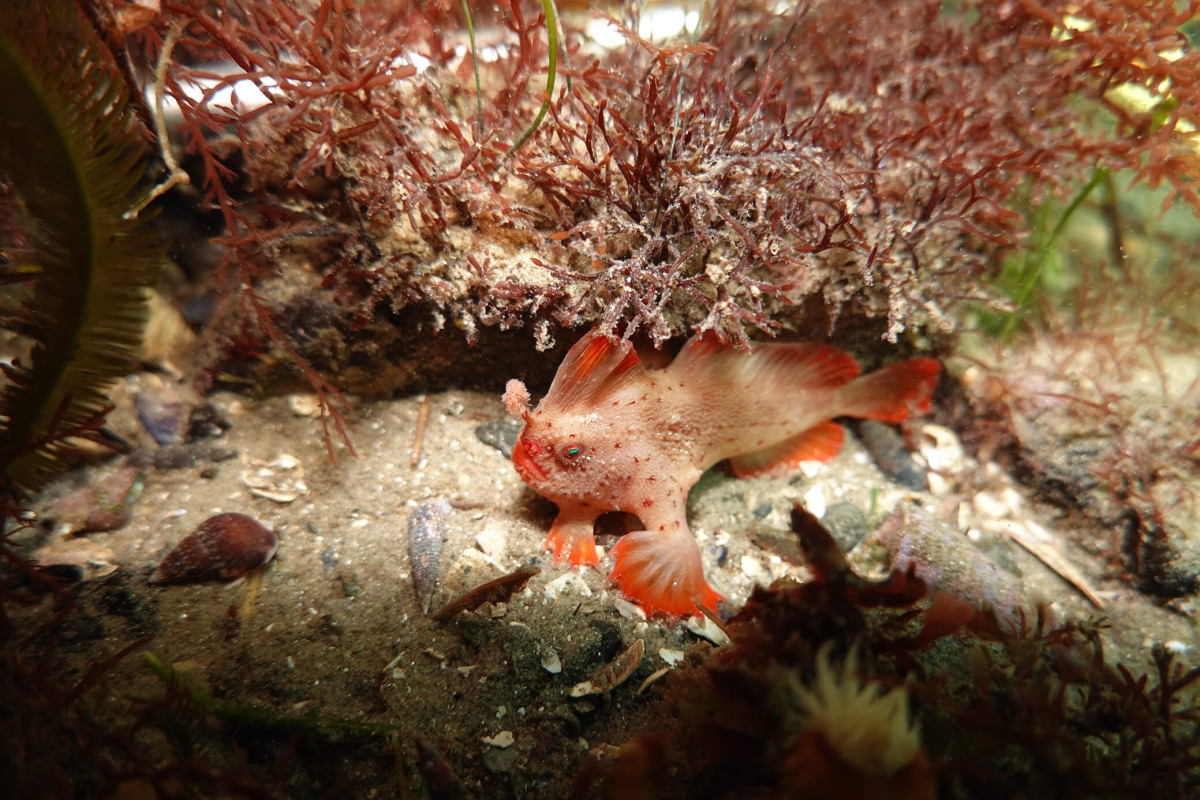
“The establishment of this seagrass nursery strengthens the capacity to restore habitat for the Critically
Endangered red handfish, and supports broader research into developing cultivation, out-planting and climate-resilient restoration approaches that are critical in our ability to provide climate-ready approaches to managing these ecosystems,” said IMAS Ecology & Biodiversity Centre Head, Professor Vanessa Lucieer.