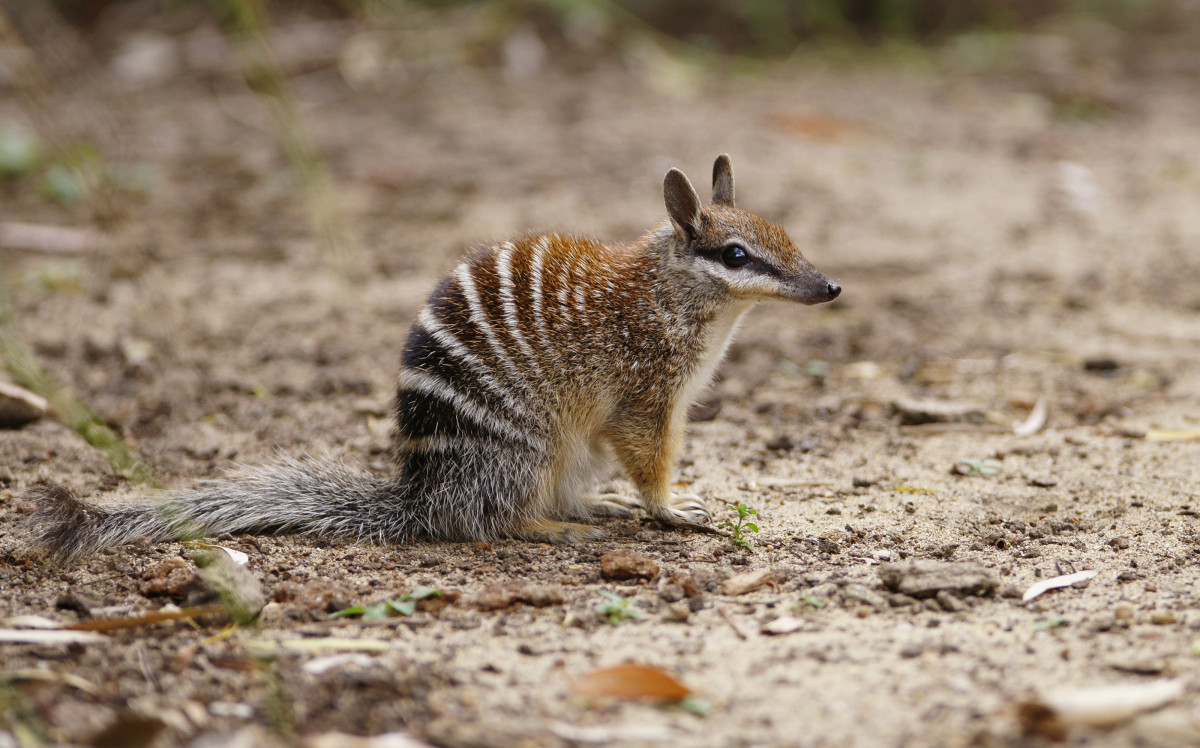
The latest survey from Dryandra Woodland has delivered encouraging news for the Numbat population, with an estimated 536 individuals now occupying the main block. Conducted over six days in November, the survey recorded 32 sightings across 8,400 hectares, including 14 young-of-year, a strong indication of healthy breeding and survival this season.
The team also fitted radio collars to four young numbats, ensuring the monitoring program maintains the coverage needed to detect changes in survival and threats. One of these juveniles was later located sharing a burrow with the adult female Bidee, confirming ongoing recruitment within established territories. The well-known adult male Casanova was also sighted during the survey.
Overall, the results point to a stable population, consistent with the strong sighting rates recorded over the past six years. The continued success of enhanced cat-control measures, combined with favourable seasonal conditions and ongoing fox baiting, appears to be supporting Numbat recovery at Dryandra. However, recent small increases in feral cat detections highlight the need for ongoing vigilance. Radio-tracking, camera-grid monitoring and targeted control efforts remain essential for maintaining the population’s stability.
Dryandra Woodland now represents one of Australia’s most reliable places to see numbats in the wild – a reflection of long-term collaboration between government agencies, researchers, community partners and organisations including FAME.
FAME is pleased to continue supporting this important work alongside the Numbat Task Force, Peel-Harvey Catchment Council and the Lions Dryandra Woodland Village Board. Special thanks to Dr Tony Friend, Rob McLean and Mark Jackman for their contributions to the 2025 survey.
News
Thanks to Mark Jackman for putting together this video of the 2025 Numbat Survey
Learn more about the project
Follow our cause in saving Australia's endangered wildlife, and receive newsletter updates on our latest projects and successes.